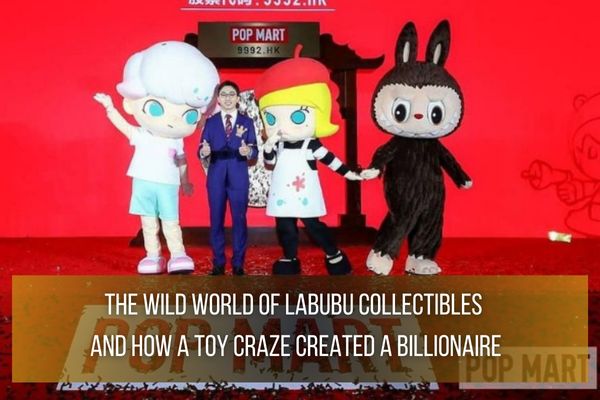
From Toy Shelf to Global Frenzy
You know a toy is taking over the world when people are willing to line up at 2 AM just for a shot at buying one. Meet Labubu, the fluffy little monster that has the internet (and the wallets of millennials and Gen Z) in a chokehold. What started as a quirky blind-box collectible from China has become a worldwide obsession, and it’s turned Pop Mart—the company behind it—into a $46.1 billion giant. Yes, billion. With a B.
And in case you’re wondering just how big this thing has gotten, let us introduce you to Wang Ning, the man behind the madness. He went from running a humble toy store in Beijing to becoming China’s 10th richest person with a net worth of $22.7 billion. All thanks to a monster with a mischievous grin.
What’s the Deal with Labubu?
Labubu isn’t your average teddy bear. It’s weird, adorable, sometimes creepy, and always in high demand. Part of what makes Labubu (and other Pop Mart figures) so addictive is the blind box concept. You buy a sealed box without knowing which figure is inside. It could be a common version, a rare chase figure, or—if you’re really lucky—a super-limited edition that sells for thousands on resale platforms.
It’s like scratching a lottery ticket, except it’s cuter and way more Instagrammable.
Fans Are Going Wild for It
The Labubu hype is real. It’s not just big in China—it’s global. TikTok and Instagram are overflowing with unboxing videos, collector hauls, and display shelf tours. Some fans even treat their Labubu collection like high art. And the lengths people go to just to get their hands on one? Legendary.
We’re talking:
- Lining up before sunrise at Pop Mart stores
- Flying to other countries just to score rare releases
- Spending thousands at online auctions (yes, one Labubu sold for Rp 2.5 billion)
It’s FOMO, mixed with nostalgia, wrapped in vinyl.
Why Adults Are Hooked
Sure, toys are usually for kids, but Pop Mart’s biggest buyers aren’t playing tag at recess. Millennials and Gen Z are fueling this craze, and it’s all about nostalgia and stress relief. These toys remind them of childhood, but they also offer a fun escape from the stress of adulting.
Plus, there’s the thrill of collecting. That dopamine hit when you open a rare figure? Better than a morning coffee.
The Billion-Dollar Empire of Pop Mart
Pop Mart isn’t just riding the Labubu wave—they’re building an empire with it. According to Fortune, the company is now worth a jaw-dropping US$ 46.1 billion, with annual revenues of $1.8 billion. And here’s the kicker: about $700 million of that comes from outside China.
- Over 530 stores worldwide
- A dedicated Pop Mart theme park in Beijing
- 46 million registered members in China alone
This isn’t a trend. It’s a full-blown movement.
Wang Ning: The Man Behind the Magic
Let’s talk about the visionary behind it all. Wang Ning, now 38, founded Pop Mart in 2010 as a small toy store in Beijing. Fast forward to 2025, and he’s sitting on a $22.7 billion fortune, making him one of China’s richest people.
His genius? Blending art, pop culture, and marketing into one irresistible package. And he didn’t stop at Labubu. Pop Mart’s other hits include:
- Molly, the wide-eyed doll with serious fashion vibes
- Crybaby, a moody and adorable collectible
- Dozens of other designer figures created in collabs with artists
Wang took niche designer toys and turned them into a global cultural force.
Not Just Toys, but Lifestyle Icons
These little figures have taken on a life of their own. For many fans, collecting Pop Mart is more than a hobby. It’s a lifestyle. Some decorate entire rooms around their collections. Others trade and flip rare pieces for profit.
And the aesthetic? Cute meets edgy. Think kawaii with an attitude.
Internet Reactions Are Hilariously Relatable
Twitter and TikTok users have not held back:
- “I swore I’d only buy one… I now own fifteen.”
- “Pop Mart is my toxic trait.”
- “My bank account is crying but my shelf looks amazing.”
Even casual browsers are getting pulled into the hype. One video of a blind box unboxing can rack up millions of views in a day. It’s like ASMR for your inner child.
The Business Playbook That Worked
So how did Pop Mart turn cute toys into a cultural phenomenon? Let’s break it down:
- Scarcity + Surprise = Collector Gold
Blind boxes and limited runs keep collectors on their toes. - Design-Driven Collabs
Pop Mart works with indie artists and designers to keep styles fresh and unpredictable. - Global Expansion
They went big, opening stores and vending machines in major cities around the world. - Community and Fandom
Pop Mart fans don’t just buy. They create content, host swaps, and build entire communities.
What’s Next for Pop Mart?
With momentum like this, Pop Mart isn’t slowing down. More international stores? Definitely. New designer collabs? You bet. Bigger events, conventions, and maybe even Netflix-style content? Don’t be surprised.
There’s even talk of more theme parks and interactive retail experiences. Pop Mart is leaning into the lifestyle angle hard, and fans are eating it up.
A Toy Craze With Billion-Dollar Teeth
Labubu might just be a furry little vinyl monster, but what it represents is much bigger: a global shift in how adults relate to play, nostalgia, and self-expression.
And Pop Mart? They nailed the formula. Cute enough for your shelf, exclusive enough for your inner collector, and just mysterious enough to keep you coming back.
So if you’ve been side-eyeing that blind box at your local toy store, go ahead. Grab it. Just don’t be surprised if you’re lining up at 2 AM for the next drop.
After all, we’re all just grown-up kids looking for a little magic.


